• Imagen 1 NASA Space Information And NASA NEWS Updates
    Nasa Information blog rolls an important play in publishing more and more effective contents of NASA with the help of nasa updates

Tuesday, October 12, 2010

Replacement of Boeing Building Space Shuttle


Hurrah! NASA space shuttle got retirement and now aerospace juggernaut is hard at work developing a new capsule-based spaceship to fly people to and from the International Space Station. Which will be the challenging deal with other.

The new Beoing space capsule is a project using the company's recent $18 million award from NASA to advance the concepts and technology necessary to build a commercial crew space transportation system. It is one of several efforts by different U.S. companies to come with new spaceships to fill the void left by NASA's retiring shuttles.

And so far, things have been progressing right on schedule…

Boeing's new spaceship

At the heart of Boeing's new spaceship design is the CST-100 capsule, which will look similar to the cone-shaped Apollo and Orion spacecraft.


The larger Orion vehicles were part of NASA's Constellation program to return astronauts to the moon, and are now slated to serve as a space station lifeboat.

"It's a little smaller than Orion, but a little bigger than Apollo,". "It carries seven, but it's fairly small – it's not as large or as spacious as the Orion."

The capsule is being built for short missions to the space station, meaning it will not be designed to stay in space for long periods of time.

Multiple rocket rides

Boeing plans to launch the CST-100 capsule from Florida, but has yet to determine which rocket will carry it into space.

The spacecraft is being designed for compatibility with a variety of rockets, in much the same way that commercial satellites are. This will give Boeing the flexibility to select an appropriate rocket later in the development process.

And while NASA has outlined a launch target for 2016, the new capsule could be rolled out sooner than expected, which could help fill the gap in future human spaceflight should NASA scrap its Constellation program.

Private space station ferries

NASA isn't the only customer Boeing has in mind for the CST-100. The company has teamed up with Bigelow Aerospace, a Las Vegas-based company that recently joined the Commercial Spaceflight Federation.

Bigelow Aerospace is developing private inflatable space habitats with the goal of launching a commercial space station in 2014.

Keep it affordable

For Boeing, one of their main challenges in expanding their branch of commercial spaceflight is in designing a relatively inexpensive option.

"The unprecedented success of the Falcon 9's inaugural launch clearly demonstrates that it's possible to dramatically reduce the cost of human spaceflight operations," " And, with months and years of demonstrations and tests on the horizon for Boeing, the company can look to the successful launch of Falcon 9 as inspiration and motivation.

"It's always good to see folks succeed in spaceflight. "It certainly provides an impetus for all commercial providers to continue working hard."

OBAMA SIGNS NASA AUTHORIZATION BILL


On Monday signed into law the 2010 NASA Authorization Act, which adds a space shuttle mission and advances development of a heavy-lift rocket and multipurpose crew exploration vehicle.

Congress also extended space station operations by four years to 2020, which made another shuttle flight crucial to transporting key lab elements to the station.

The additional shuttle flight is scheduled for June to deliver and remove equipment at the International Space Station.

Some supplies and equipment won’t fit on the Russian Federal Space Agency’s Soyuz spacecraft, one of the vehicles that will ferry astronauts to the space station before a commercial vehicle is ready by 2014.

Nelson and U.S. Sen. Kay Bailey Hutchison, R-Texas, co-authored the bill, which received bipartisan support in the House and Senate.

“From a work force standpoint, the extra flight allows NASA, at several space centers, a smooth transition for shuttle workers to the next program,”

United Space Alliance, the primary space shuttle contractor, laid off 333 Houston area employees Oct. 1, two days after Congress approved the NASA authorization bill. Company officials announced the layoffs in July.


The other remaining shuttle flights are scheduled for Nov. 1 and Feb. 27.

Congress will conduct an appropriations review when a lame duck session resumes in November.

Under this bill, the development of a new heavy-lift rocket would start as early as next year. This is a far cry from the 2015 review date for heavy-lifts that Obama had called for.

This means that the space flight gap that NASA is facing potentially stands to be far less expansive than under the president’s original plans. Nelson stated that he views this and other elements of the bill as ensuring that NASA will have a very bright future.

Monday, October 11, 2010

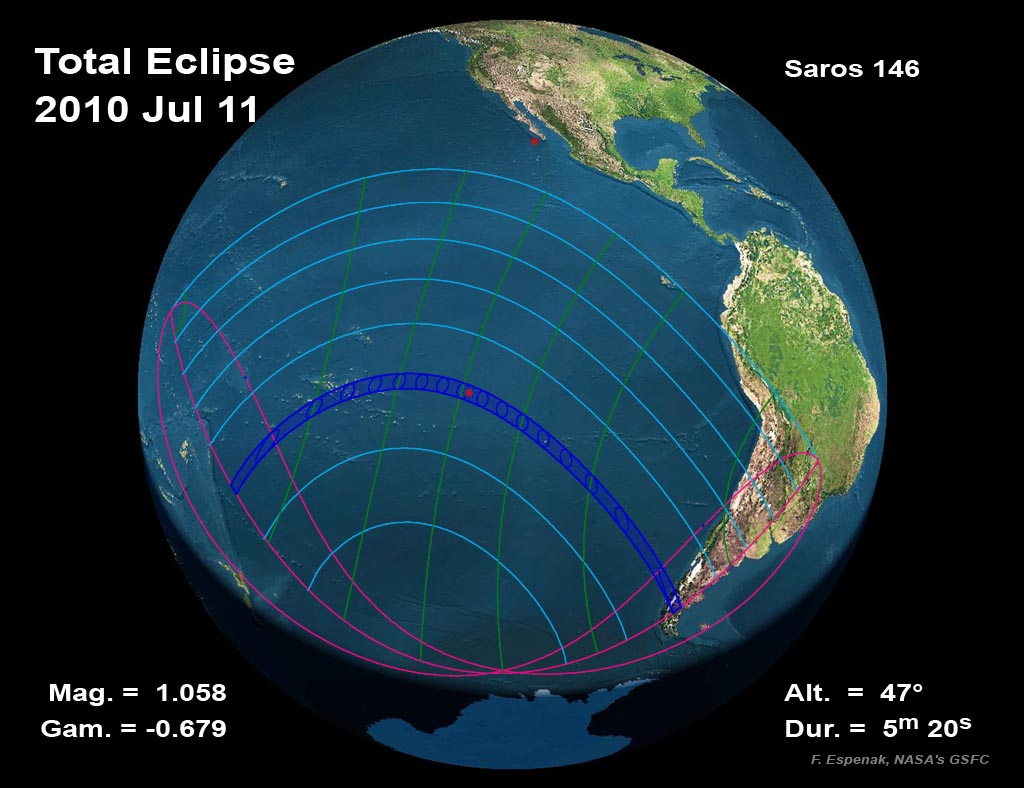
Total Solar Eclipse of 2010 July 11

On Sunday, 2010 July 11, a total eclipse of the Sun is visible from within a narrow corridor that traverses Earth's southern Hemisphere. The path of the Moon's umbral shadow crosses the South Pacific Ocean where it makes no landfall except for Mangaia (Cook Islands) and Easter Island (Isla de Pascua). The path of totality ends just after reaching southern Chile and Argentina. The Moon's penumbral shadow produces a partial eclipse visible from a much larger region covering the South Pacific and southern South America

2010 Total Solar Eclipse Global Map
Click to enlarge.

This web site has been established for the purpose of providing detailed predictions, maps, figures and information about this important event. The material here is adapted from Annular and Total Solar Eclipses of 2010 (NASA/TP-2008-214171). The publication date of this document is 2008 December. It is part of NASA's official eclipse bulletin publication series. Instructions and a form for ordering a hard copy of this publication can be found at: Order Form for NASA Eclipse Bulletins.

A special Web site is also available for the Annular Solar Eclipse of 2010 January 15.


Preliminary Look at the Total Solar Eclipse of 2010 July 11

This data is from a paper presented at: IAU Symposium 233 - Solar Activity and Its Magnetic Origin

See also: Eclipse Weather and Maps (Jay Anderson)


Interactive Map of the Path of Totality

An implementation of Google Map has been created which includes the central path of the 2010 total solar eclipse. This allows the user to select any portion of the path and to zoom in using either map data or Earth satellite data.


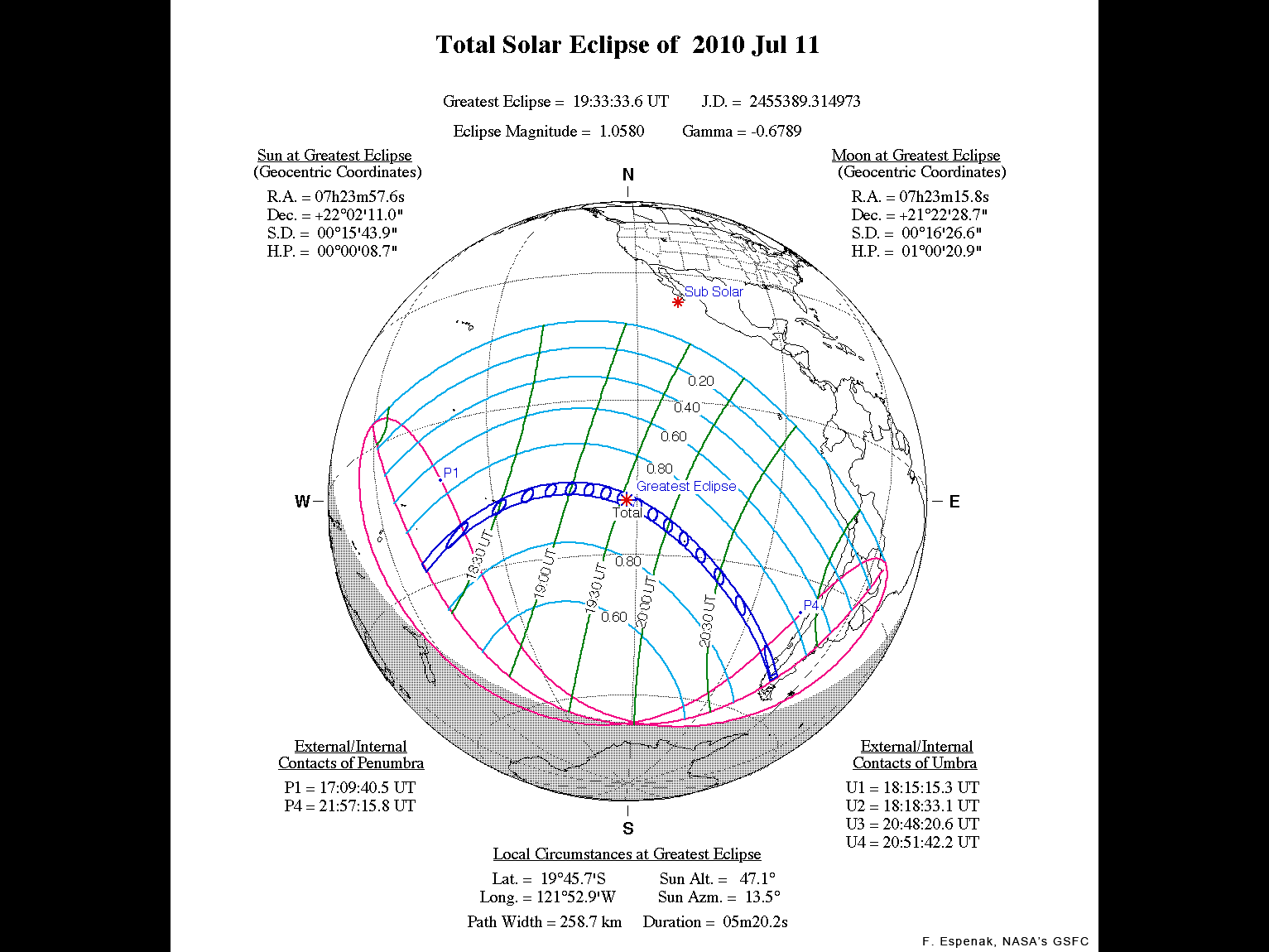
General Map of the Eclipse Path

The following map shows the overall regions of visibility of the partial eclipse as well as the path of the total eclipse through the Pacific Ocean, Chile and Argentina. It uses high resolution coastline data from the World Data Base II (WDB). Curves of maximum eclipse are included as well as the outline of the umbral shadow.

The map is available as a high resolution (300 dpi) PDF file.

Figure
Number
Title/Description Map
File
Figure 3.1 Orthographic (Global) Map of 2010 Total Solar Eclipse PDF

From NASA Tech. Pub. Annular and Total Solar Eclipses of 2010 (NASA/TP-2008-214171).


Detailed Maps of the Path of Totality

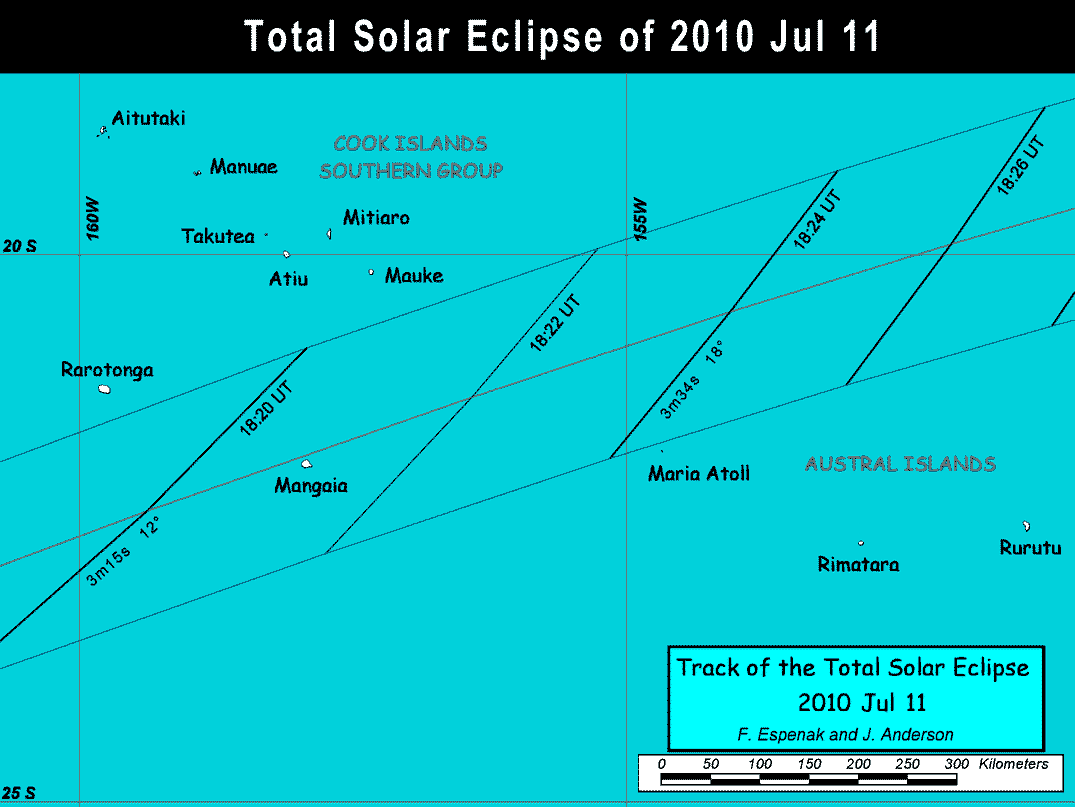
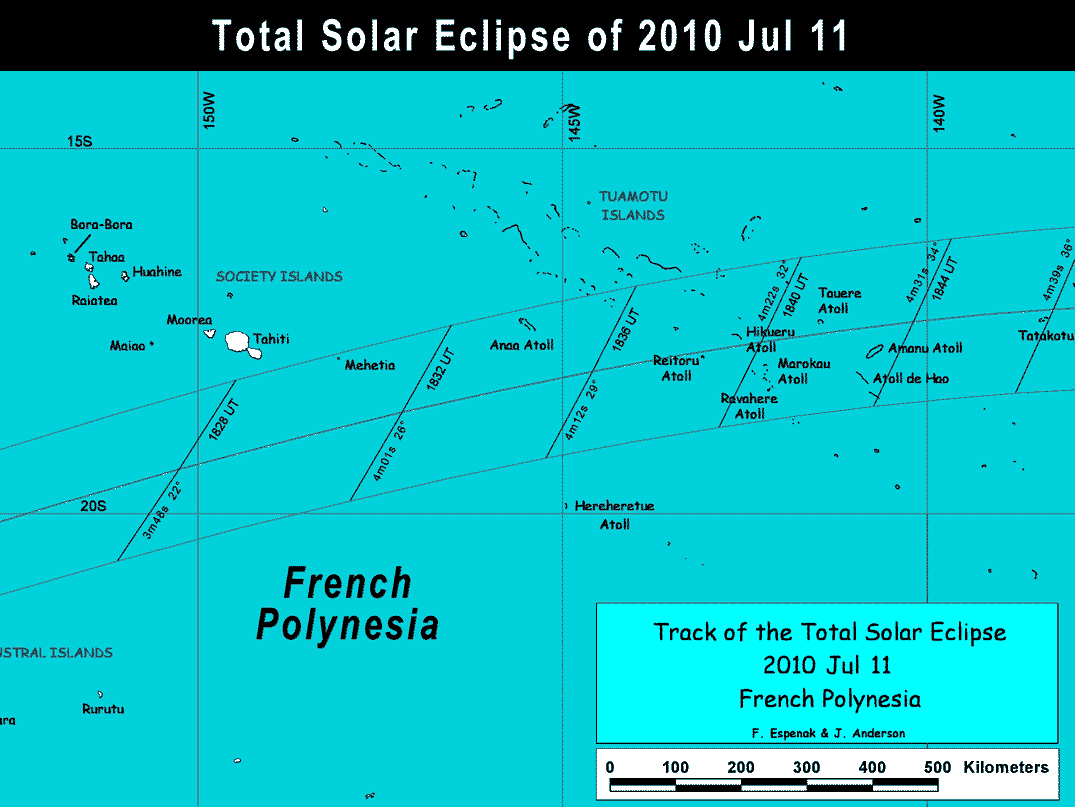
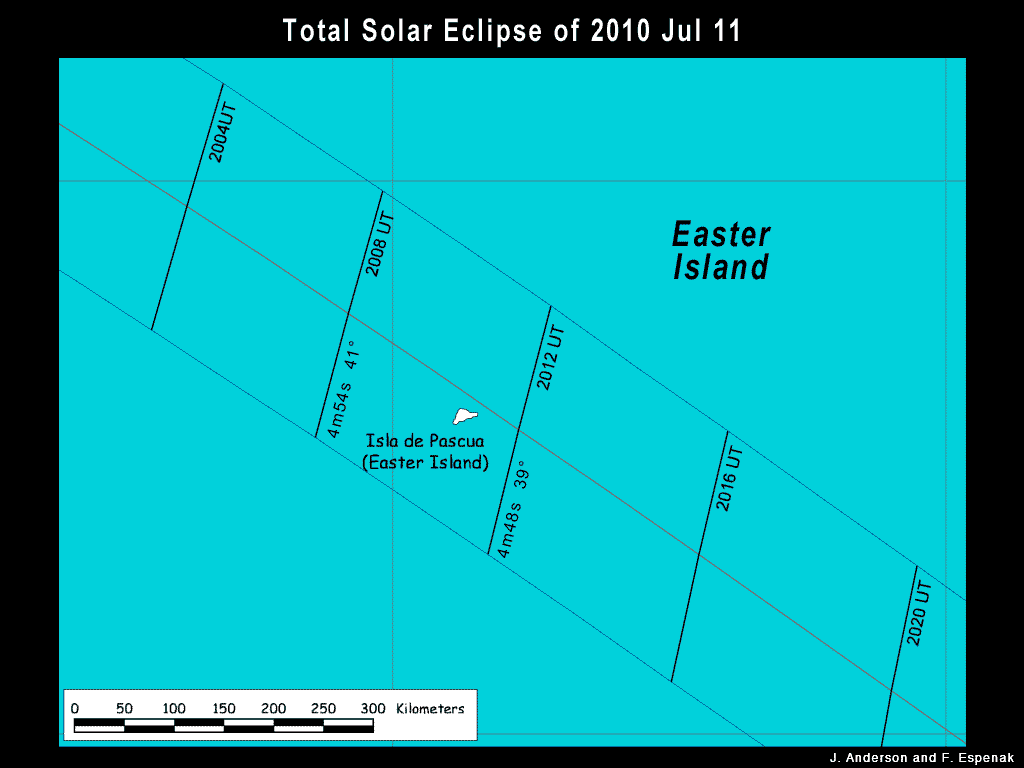
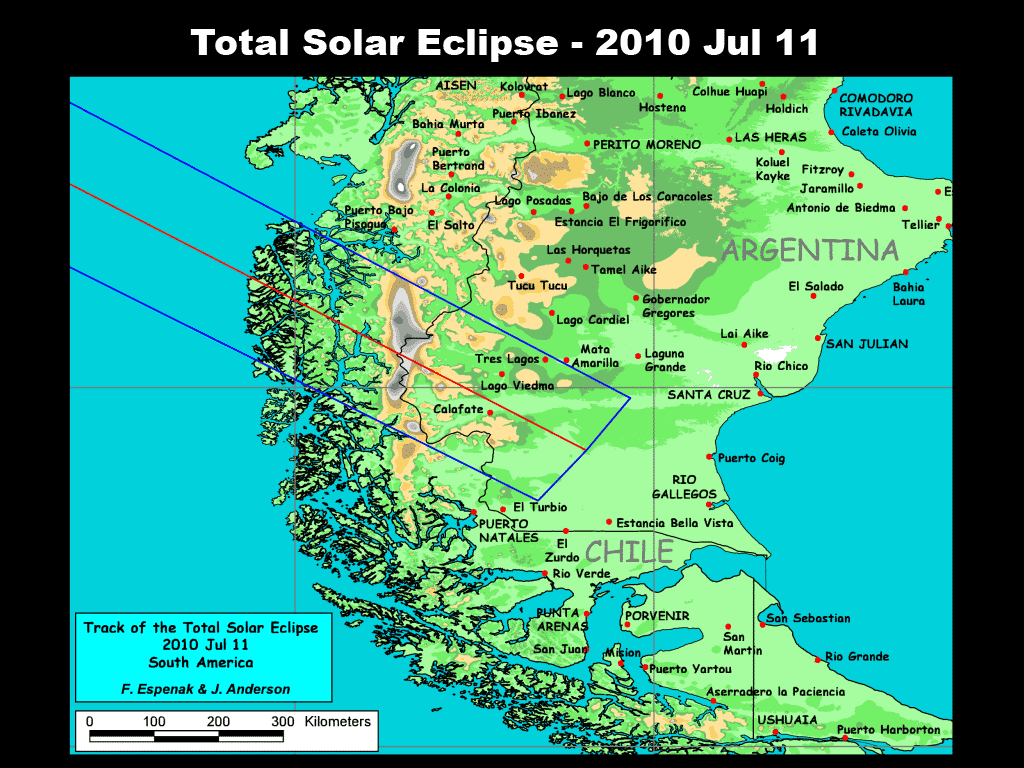
The following maps show path of the 2010 total eclipse in greater detail. They use high resolution coastline, city and highway data from the Digital Chart of the World (DCW). Each map was chosen to isolate a specific region along the the eclipse path. Curves of maximum eclipse are included as well as the outline of the umbral shadow. Within the umbral path, curves of constant duration have been plotted for totality.

The maps are available as high resolution (300 dpi) PDF files.

Figure
Number
Title/Description Map
File
Figure 3.2 Path of Totality - Mangaia, Cook Islands PDF
Figure 3.3 Path of Totality - Tahiti PDF
Figure 3.4 Path of Totality - Tuamotu Archipelago PDF
Figure 3.5 Path of Totality - Easter Island (Isla de Pascua) PDF
Figure 3.6 Path of Totality - Chile & Argentina PDF

From NASA Tech. Pub. Annular and Total Solar Eclipses of 2010 (NASA/TP-2008-214171).


Additional Figures

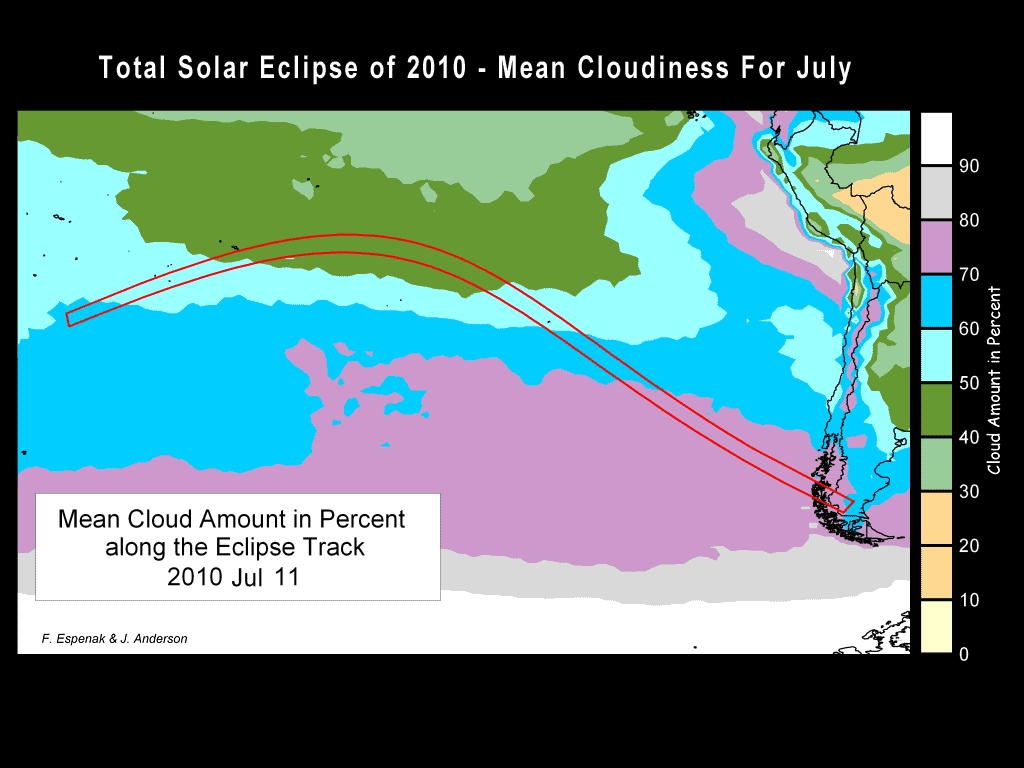
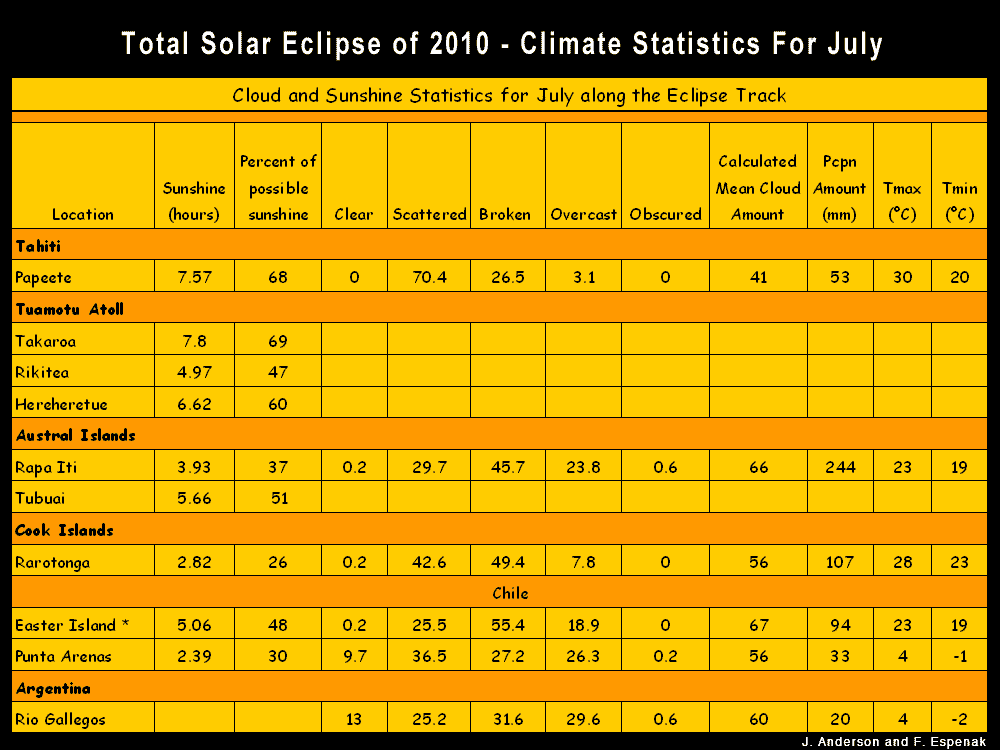
The following figures depict the lunar limb profile, and meteorological data along the eclipse path.

Figure
Number
Title/Description Figure
File
Figure 3.7 Lunar Limb Profile for 2010 July 11 at 19:30 UT PDF
Figure 3.8 Typical weather Systems in July PDF
Figure 3.9 Average Cloudiness in July Along the Eclipse Path PDF
Figure 3.10 Annual Precipitation Statistics along the Eclipse Path PDF

From NASA Tech. Pub. Annular and Total Solar Eclipses of 2010 (NASA/TP-2008-214171).


Eclipse Elements, Shadow Contacts and Path of Totality

The following tables give detailed predictions including the Besselian Elements, shadow contacts with Earth, path of the umbral shadow and topocentric data (with path corrections) along the path.

From NASA Tech. Pub. Annular and Total Solar Eclipses of 2010 (NASA/TP-2008-214171).


Coordinate Tables for the Path of Totality

The following tables do not appear in the NASA 2010 Eclipse Bulletin due to page constraints. The tables provide detailed coordinates for the path of the umbral shadow as well as the zones of grazing eclipse. They are listed in a format convenient for plotting on maps.


Local Circumstances

The following table gives the local circumstances of the eclipse from various cities throughout the region of eclipse visibility. All contact times are given in the tables are in Universal Time.

From NASA Tech. Pub. Annular and Total Solar Eclipses of 2010 (NASA/TP-2008-214171).


Additional Tables

The following tables also appear in the Annular and Total Solar Eclipses of 2010 (NASA/TP-2008-214171).


Explanation of Eclipse Maps and Tables

The following links give detailed descriptions and explanations of the eclipse maps and tables.


Reproduction of Eclipse Data

All eclipse calculations are by Fred Espenak, and he assumes full responsibility for their accuracy. Permission is freely granted to reproduce this data when accompanied by an acknowledgment:

"Eclipse Predictions by Fred Espenak, NASA's GSFC"

For more information, see: NASA Copyright Information